
In today’s digital-first economy, offering a smooth and secure payment experience is essential for growing your business. Whether you operate a small ecommerce store or a large online enterprise, understanding how payment gateways, payment processors, and payment facilitators work can help you build trust, increase conversions, and scale more efficiently.
Here’s everything you need to know.
A payment gateway is a secure online service that connects your ecommerce site to your customer’s bank or credit card provider. It acts like a digital point-of-sale (POS) terminal, transferring encrypted payment information to complete transactions safely.
Just like a physical card reader checks a credit card’s chip in-store, a payment gateway verifies online transactions, protecting both you and your customers from fraud.
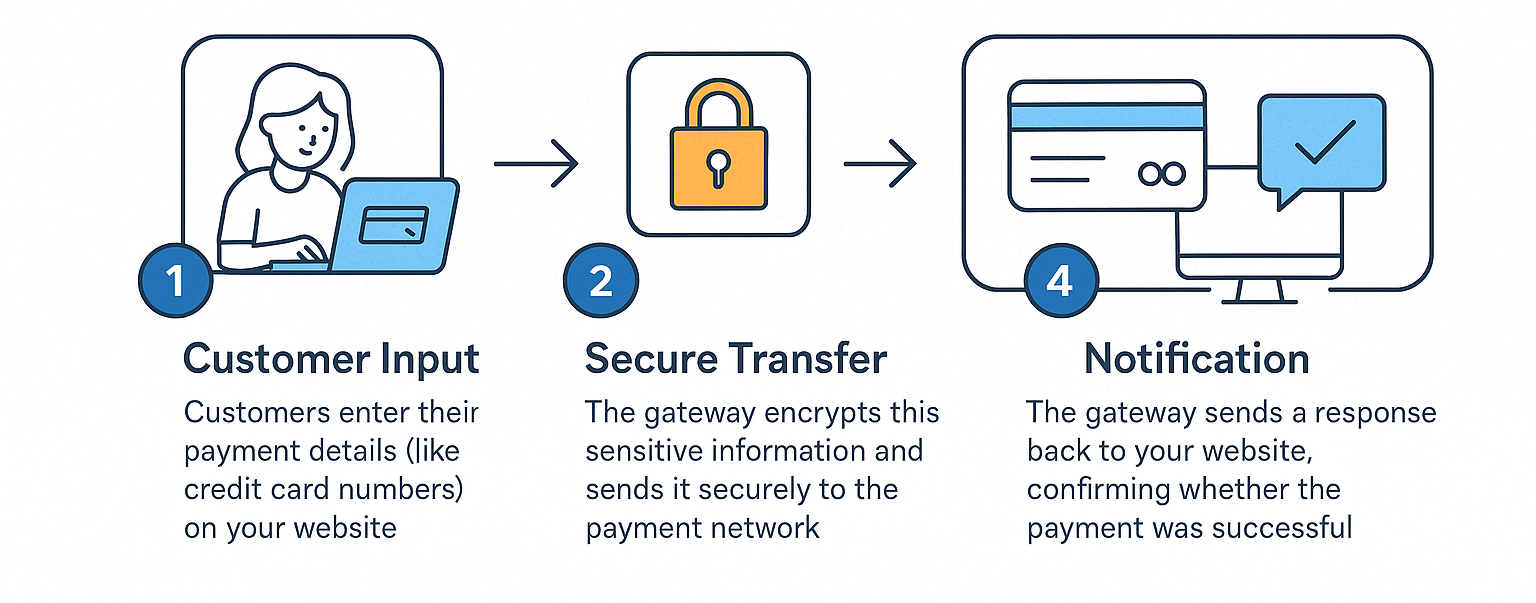
The payment gateway process follows four simple steps:
A reliable payment gateway ensures a smooth, secure checkout experience — which is crucial for customer satisfaction and loyalty.
Leading companies offering payment gateway services include:
Major banks and fintech platforms
These providers help businesses process payments securely across different markets and currencies.
While closely related, payment gateways and payment processors play different roles:
For online sales, you need both. Many services — like PayPal — bundle gateway and processor functionality into a single platform.
Banks and payment gateways are part of the larger transaction process, but serve different functions:
Each component is critical for secure online transactions.
Depending on your business model and customer needs, you might choose one of the following ecommerce payment solutions:
Customers complete the checkout and payment process directly on your website, creating a seamless, branded experience. Ideal for larger businesses that want full control over the user journey.
Customers are sent to a third-party platform (like PayPal) to complete their purchase. This provides enhanced security and convenience, especially for small to mid-size businesses.
The initial checkout takes place on your website, but the payment is completed on a separate, secure backend system. This hybrid model balances branding with security.
In addition to payment gateways and processors, many modern businesses are turning to payment facilitators (also known as PayFacs) for a faster, more streamlined payment experience.
A payment facilitator simplifies the traditional payment setup by allowing multiple merchants to operate under a single master merchant account. This reduces complexity, speeds up onboarding, and makes it easier for businesses to start accepting payments without heavy paperwork or long approval times.
Key Benefits of Payment Facilitators:
At Auth-Clear.com, we specialize in helping businesses of all sizes unlock faster, simpler, and more secure payment solutions. With Auth-Clear, you get:
Choosing the right combination of payment gateways, payment processors, and payment facilitators can make a world of difference for your business growth. By partnering with a trusted provider like Auth-Clear, you can create a seamless, secure payment experience that builds customer trust and drives higher conversions.
Do follow us on Instagram and LinkedIn for more payment related contents.